
Early Life and Education
Wanda Yvette Sykes was born on March 7, 1964, in Portsmouth, Virginia, and spent much of her childhood in the suburban communities surrounding Washington, D.C. Her family background combined discipline and public service. Her father worked as a U.S. Army colonel, while her mother was employed as a banker. This environment exposed Sykes to both structured expectations and an awareness of broader social systems, elements that would later find their way into her observational and socially conscious humor.
Growing up, Sykes experienced a relatively traditional upbringing, attending local schools and participating in everyday activities typical of middle-class American life. However, even in her youth, she demonstrated a sharp observational ability and an awareness of the inconsistencies and contradictions in social behavior. These early tendencies would become a defining characteristic of her comedic voice.
Sykes chose to attend Hampton University, a historically Black institution in Virginia known for emphasizing leadership and professional development. There, she pursued a Bachelor of Science degree in marketing. Her choice of major reflected a practical mindset and a desire to enter a stable career path. During her college years, she did not initially consider comedy as a professional pursuit. Instead, her focus remained on academic achievement and preparing for a career in business or government.
Her time at Hampton was significant not only for academic development but also for exposure to diverse perspectives within the African American community. This period helped sharpen her awareness of social dynamics, identity, and institutional structures, themes that would later appear in her comedic material. After graduating, she moved into a conventional career path, which delayed but did not prevent her eventual transition into entertainment.
Career Beginnings
After completing her education, Wanda Sykes began working as a contracting specialist at the National Security Agency. This role involved procurement and administrative responsibilities, offering stability and a clear professional trajectory. Although she performed well in this capacity, the work did not provide a creative outlet, and she gradually became aware of a desire to pursue something more expressive.
Her entry into comedy occurred in the late 1980s when she participated in a stand-up comedy talent showcase in Washington, D.C. Initially, this step was exploratory rather than strategic. However, her performance revealed both her natural comedic timing and her ability to connect with audiences through relatable yet pointed commentary. Encouraged by the response, she began to perform more regularly.
Sykes eventually made the decision to leave her government job and relocate to New York City, a move that marked a significant turning point in her career. New York provided access to a wide range of comedy clubs and a competitive environment that allowed her to refine her material. Performing frequently, she developed a style that combined conversational delivery with incisive observations about race, gender, politics, and everyday interactions.
The early phase of her comedy career required persistence and adaptability. Like many comedians, she faced inconsistent opportunities and the challenge of distinguishing herself in a crowded field. Over time, however, her voice became more defined, characterized by a blend of candidness and analytical humor.
Breakthrough in Comedy
Wanda Sykes achieved wider recognition when she joined The Chris Rock Show as a writer and performer. This opportunity allowed her to work within a structured television format while still contributing her own perspective. Her involvement in the show demonstrated her ability not only to perform but also to craft comedic material that resonated on a broader scale.
Her work on the show earned her an Emmy Award, marking a key milestone in her career. More importantly, it introduced her to a national audience and established her reputation as a sharp and thoughtful comedic voice. The show’s format, which blended political commentary with humor, aligned well with Sykes’s strengths.
During this period, she honed her approach to comedy, focusing on clarity, timing, and the effective use of personal experience. Her ability to address complex issues without relying on overly abstract or inaccessible language helped her reach a diverse audience. This balance between specificity and universality became a defining feature of her work.
Film and Television
Following her success in television writing and stand-up, Wanda Sykes expanded into acting, appearing in a variety of films and television series. Her roles often highlighted her distinctive delivery style, allowing her to bring a unique presence to both comedic and supporting characters.
In film, she appeared in projects such as Monster-in-Law, where she worked alongside established actors and contributed to the film’s comedic dynamic. While many of her film roles were supporting rather than leading, they consistently showcased her ability to enhance scenes through timing and character interpretation. She also lent her voice to animated projects, further demonstrating her versatility.
On television, Sykes maintained a strong presence across multiple formats. She created, produced, and starred in Wanda at Large, a sitcom that drew inspiration from her own life and experiences. Although the show had a relatively short run, it represented an important step in her career, as it gave her creative control and allowed her to shape content more directly.
Her recurring role on Curb Your Enthusiasm brought her into collaboration with Larry David, whose improvisational style complemented her own. Her appearances on the show were marked by her ability to engage in unscripted exchanges while maintaining clarity and comedic precision.
In addition to scripted television, Sykes became a frequent guest and commentator on talk shows and panel programs. These appearances reinforced her reputation as a commentator who could address current events with humor while maintaining a coherent perspective.
Stand-Up and Comedy Specials
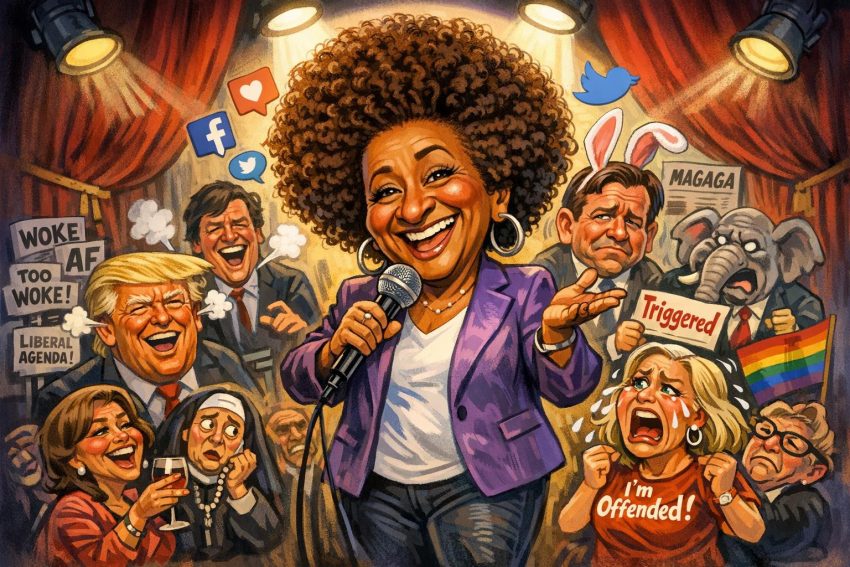
Stand-up comedy has remained a central component of Wanda Sykes’s career. Her specials, including I’ma Be Me and Not Normal, illustrate the evolution of her comedic voice over time. These performances often incorporate social commentary, personal narratives, and reflections on political developments.
Her stand-up style is characterized by directness and clarity. Rather than relying heavily on physical comedy or elaborate storytelling structures, she focuses on concise observations and carefully constructed arguments. This approach allows her to address controversial or complex topics without losing audience engagement.
In I’ma Be Me, Sykes explored themes such as aging, relationships, and societal expectations, blending humor with reflection. The special was noted for its balance between personal disclosure and broader commentary. Similarly, Not Normal addressed political and cultural shifts, emphasizing discrepancies between public discourse and lived experience.
Her ability to integrate personal identity into her material without making it the sole focus contributes to the accessibility of her work. She discusses race, gender, and sexuality in ways that are specific yet relatable, maintaining a tone that invites consideration rather than imposing a singular viewpoint.
Advocacy and Personal Life
Wanda Sykes has been actively involved in advocacy, particularly in relation to LGBTQ+ rights. In 2008, she publicly came out as a lesbian during a rally in Las Vegas focused on opposing same-sex marriage bans. This moment marked both a personal and public alignment of her identity with her advocacy work.
Her decision to come out publicly was significant within the entertainment industry, where representation has often been uneven. By addressing her identity openly, she contributed to increased visibility and broader discussions about inclusion. Her advocacy extends beyond public statements, as she frequently incorporates themes related to equality and civil rights into her comedy.
Sykes is married to Alex Sykes, a French businesswoman. The couple has two children, and Sykes has occasionally referenced her family life in her stand-up routines. These references tend to focus on everyday experiences, emphasizing commonalities rather than presenting her life as exceptional.
Her approach to advocacy is consistent with her comedic style. She uses humor as a tool to examine social issues, presenting arguments in a way that encourages reflection without relying on overt emotional appeals. This method allows her to engage a wide audience while maintaining a clear perspective.
Recent Work and Influence
In recent years, Wanda Sykes has continued to work across multiple areas of entertainment, including stand-up, television, and film. She has participated in various comedy specials, including collaborative projects, and has taken on roles that reflect both her experience and adaptability.
Her involvement in projects such as streaming platform specials and ensemble productions demonstrates her ability to remain relevant in a changing media landscape. She has adapted to new distribution formats while maintaining consistency in her comedic approach.
Sykes also continues to contribute to political and social discourse through appearances, interviews, and written material. Her commentary often focuses on current events, using humor to analyze public policies, cultural trends, and institutional behavior.
Her influence extends to other comedians and writers, particularly those interested in combining humor with social analysis. By maintaining a consistent voice and engaging with substantive topics, she has established a model for integrating comedy with commentary without diminishing either element.
For more detailed information about her filmography and recent projects, her profile on the Internet Movie Database (IMDb) provides a comprehensive overview.
Conclusion
Wanda Sykes’s career reflects a progression from a conventional professional path to a sustained presence in comedy and entertainment. Her work is defined by clarity, precision, and an emphasis on observation. Through stand-up, television, and film, she has developed a recognizable voice that addresses both everyday experiences and broader social issues.
Her contributions extend beyond performance, encompassing writing, production, and advocacy. By maintaining a consistent perspective and adapting to changes in the industry, she has built a career that spans several decades. Her influence is evident in her continued relevance and in the ways her work resonates with diverse audiences.